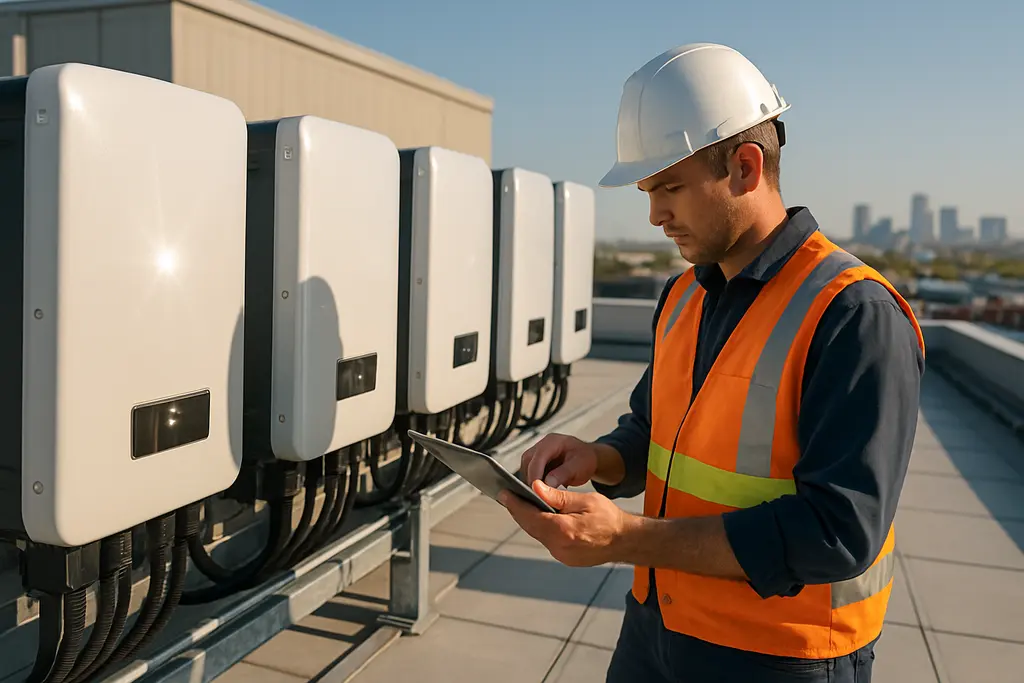
The FCC Inverter Ban changed how certain connected power electronics can enter the U.S. market, but its energy efficiency effects are not the same as a new conversion-efficiency rule. The July 28, 2026 action added foreign-produced power inverters with remote communication features to the FCC Covered List, which affects authorization for new models. From an engineering education and energy-systems perspective, the central question is not whether an inverter wastes more or less electricity after the rule. The better question is whether supply constraints, qualification steps, and replacement planning could slow or redirect deployment of solar, storage, and other inverter-based systems.
What The FCC Inverter Ban Changed
FCC Inverter Ban Scope
On July 28, 2026, the FCC added foreign-produced power inverters with remote communication features, including Wi-Fi, cellular, Bluetooth, Ethernet, and related interfaces, to its Covered List under the Secure and Trusted Communications Networks Act of 2019. New models in that covered category may no longer receive the FCC authorizations required for import, sale, or marketing in the United States unless they receive a Conditional Approval, according to the Baker McKenzie summary of the FCC action on inverters and robotics.
The rule language matters. It is not described in the supplied research as a general prohibition on every inverter made outside the United States. The focus is on foreign-produced power inverters with remote communication features. That distinction is technical, because an inverter without covered communications capabilities is not the same device from a network-risk standpoint as an inverter that can communicate through common wired or wireless interfaces. The research also refers to robotics being added in the same FCC action, but it provides more detailed inverter facts than robot-specific energy data. For that reason, the energy analysis here centers on inverters and treats the robotics impact as less certain.
Clarified Exceptions And Dates
The action was clarified after the initial notice. A revised Public Notice, DA-26-870, was released on August 20, 2026. It stated that some foreign-produced inverters are excepted if they qualify as a domestic end product under 48 CFR § 25.101(a), or if they are eligible for the Section 45X Advanced Manufacturing Tax Credit. Under that domestic-content standard, the required domestic content exceeds 65% for 2024 through 2028 deliveries and rises to 75% in 2029 and beyond, as summarized in the notice on the FCC Covered List modification for power inverters.
The supplied research also states that the restriction was not retroactive. Inverters already authorized by the FCC before July 28, 2026, or already purchased or installed, remained permitted for import, sale, use, and firmware or software updates through at least January 1, 2029, under waivers of Permissive Changes. This point limits the immediate energy-efficiency shock. Existing solar, storage, and power-conversion installations did not become unusable solely because of the July 28 action. For classroom energy labs, field training programs, and maintenance instruction, already-authorized hardware can still be relevant when teaching inverter behavior, grid connection concepts, and safe update practices.
Energy Efficiency Effects Are Mostly Indirect
Conversion Efficiency Is Not The Rule Target
The FCC action described in the research is an authorization and security-related market-access change, not a test method for inverter conversion efficiency. The rule does not set a new watt-loss threshold, thermal limit, maximum standby draw, or required power factor value in the information supplied. That means a direct claim such as “the rule improves inverter efficiency” would not be supported by the provided record.
A power inverter’s practical energy impact depends on its conversion losses, control behavior, thermal design, standby consumption, communication module behavior, and grid-support settings. None of those performance values are quantified in the supplied FCC-related research. The FCC Inverter Ban therefore affects energy efficiency mainly through system deployment pathways. If project teams must qualify different equipment, wait for authorized models, or redesign around domestic-content exceptions, the energy outcome comes from installation timing and equipment availability rather than a documented change in electrical efficiency inside a single inverter.
Deployment Delays Can Affect Utilization
The research notes that inverter-based resources have become a large share of new U.S. Western Interconnection capacity. It reports that nearly 85% of the nameplate generation capacity added in 2025 in that region came from inverter-based resources, including solar, wind, and battery storage. It also reports that installed inverter-based resource capacity in the Western Interconnection rose from about 44 GW at the end of 2019 to about 81 GW by the end of 2024, with roughly 18 GW added in 2024 alone.
Those figures explain why authorization rules for connected inverters can matter for energy planning. If a high-growth equipment category depends on approved power electronics, any qualification bottleneck can affect project schedules. The efficiency issue is then measured at the system level: delayed solar or storage capacity may change how often existing generation assets run, how much storage is available for peak periods, and how grid operators balance variable output. The supplied research also cautions that inverter-based resources do not deliver full nameplate capacity continuously in the same way as dispatchable sources. Storage, demand response, and grid improvements can change the practical outcome, but the record provided here does not quantify a specific loss or saving from the FCC action.
Who Is Affected In Energy Projects

Developers, Integrators, And Schools
Project developers and integrators face the most direct procurement questions. The research states that inverter manufacturing for the U.S. market has been highly import-dependent. It reports that in 2020, only about 7% of inverters delivered into the U.S. market came from U.S.-headquartered manufacturers, while the rest came from companies based abroad. It also states that more than 200 GWac of photovoltaic inverters and power conversion systems had been supplied to U.S. commercial, industrial, and utility-scale markets over the past decade, with more than 90% imported.
For hands-on education programs, the implications are practical. A school laboratory that uses small inverter demos is not the same as a utility-scale procurement program, yet instructors still need to teach students why communications hardware, firmware policy, device authorization, and grid equipment sourcing now intersect. A lesson kit can compare an isolated DC-to-AC conversion exercise with a connected inverter architecture. The electrical concept remains the same at a high level, but the compliance and security context changes once remote communication is present.
- Installed projects using already authorized equipment are treated differently from new covered models seeking authorization after July 28, 2026.
- Connected communication features are central to the covered inverter category described in the research.
- Domestic-content exceptions and tax-credit eligibility can affect procurement choices, not just electrical design choices.
- Energy-efficiency analysis should separate device-level conversion losses from project-level deployment delays.
Security Review Without Overreach
Connected inverters deserve security review because they can include network interfaces and update paths. The record supplied here does not prove that every foreign-made connected inverter is unsafe, and it does not provide vulnerability counts, incident data, or comparative test results. A cautious technical program should avoid broad claims and instead document device origin, authorization status, communication interfaces, firmware-update policy, and maintenance responsibility.
This is also where energy teams and IT teams often need a shared vocabulary. A solar or storage engineer may focus on power flow, thermal behavior, and uptime, while a security reviewer may focus on remote access, patch handling, and vendor controls. For further reading on consumer security, a related network resource like Best Antivirus Pro can offer general context, but inverter compliance decisions should rely on FCC notices, device authorization records, and project-specific engineering documentation.
FCC Inverter Ban Energy Efficiency Perspective
Practical Reading Of The Evidence
The cautious reading of the FCC Inverter Ban is that it may influence energy efficiency indirectly through market access, sourcing, and deployment timing. It does not, based on the supplied research, establish a new technical efficiency rating for inverters. It also does not immediately remove previously authorized equipment from service. That reduces the likelihood of abrupt operational disruption for installed systems, although replacement planning and new project procurement can still be affected.
The cost side is also supported only in broad terms by the research. It states that imported inverters often come at lower cost because of scale and lower labor or component costs abroad, and that a shift toward domestic models could raise upfront equipment costs unless incentives, tax credits, or larger-scale domestic production offset those costs. The research also reports that U.S. PV inverter and power-conversion manufacturing announcements could push annual domestic production capacity above 100 GWac by the end of 2027 if planned investments proceed. That is a conditional statement, not a guaranteed supply outcome.
For energy-efficiency evaluation, the cleanest method is to track separate variables: inverter authorization status, delivered equipment cost, project delay, installed capacity, actual generation, storage dispatch, and curtailment. Without those project-level numbers, the most accurate statement is limited: the July 28, 2026 FCC action changed the authorization path for certain connected foreign-produced inverters, and that can affect the pace and cost of deploying inverter-based resources. Whether the net energy-efficiency effect is positive, negative, or negligible depends on project timing, available compliant equipment, grid needs, and how quickly replacement supply can meet demand.