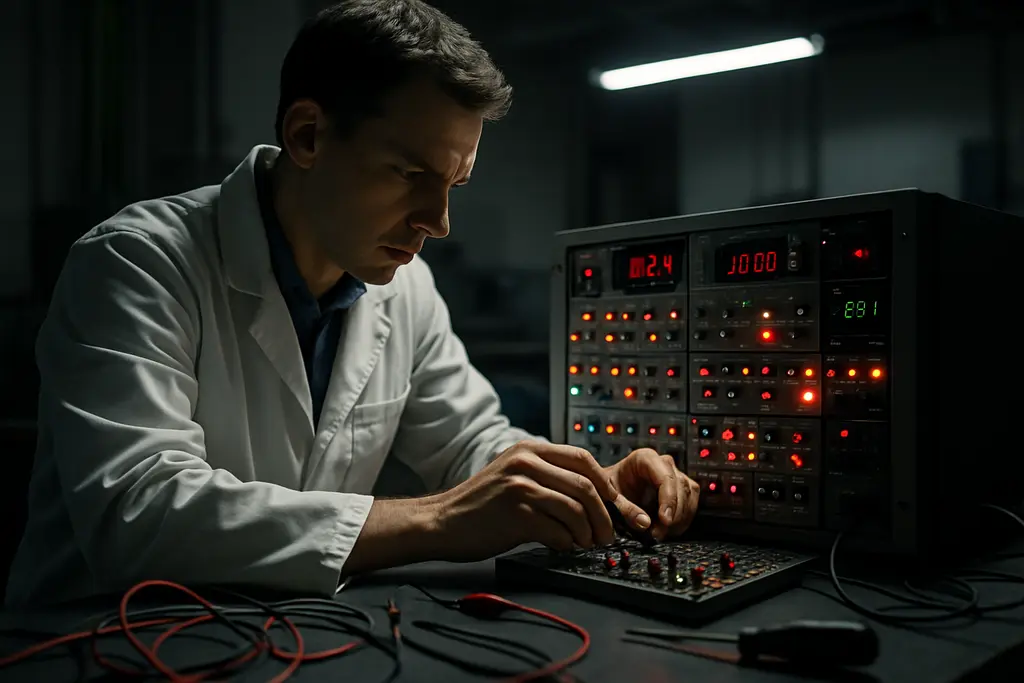
EO 14421 created a new federal review path for certain foreign-supplied equipment used in the U.S. bulk-power system. Signed on August 26, 2026, and published in the Federal Register on August 31, 2026, the order declared a national emergency tied to security risks in electric grid equipment and related technology Federal Register filing. For utilities, developers, equipment vendors, and engineering teams, the technical issue is not only where a device was manufactured. The order also raises questions about ownership, remote access, firmware provenance, service dependencies, and whether a component could affect reliable grid operation.
The order applies to the bulk-power system, not ordinary local distribution equipment. The Department of Energy describes the covered system as including transmission lines rated at 69 kilovolts or more, along with control systems and generation needed to maintain reliability; local distribution facilities are excluded DOE summary. That threshold matters because many interconnection projects include assets at different voltage classes, and the practical boundary may not match a project team’s existing compliance maps.
What EO 14421 Changed Technically
EO 14421 Scope For Bulk-Power Assets
The order defines covered electric equipment broadly. The research record identifies equipment used in substations, control rooms, and power generating stations, including reactors, substation transformers, utility-scale and grid-connected inverters, battery energy storage systems, uninterruptible power supplies for critical infrastructure, generators, high-voltage breakers, metering devices, protective relays, circuits, and industrial control systems. Those control systems may include programmable logic controllers, remote terminal units, intelligent electronic devices, safety instrumented systems, and protective relaying systems.
Under EO 14421, the technical scope is wider than a simple list of heavy metal assets. A transformer may be the most visible component, but a relay with firmware, a remote terminal unit connected to a control center, or an inverter with vendor-managed communications can all carry different security questions. A mechanical or electrical specification alone is not enough to assess risk. Procurement files may need to connect hardware identifiers, software build information, component origin, vendor ownership, cloud or remote service access, and replacement availability.
Transactions Affected After August 26, 2026
The order covers acquisition, importation, transfer, and installation of foreign-produced bulk-power system electric equipment initiated after August 26, 2026, when DOE determines that the equipment is linked to a covered foreign entity and poses an undue or unacceptable national security risk. The risk categories in the research include sabotage, remote access, subversion, supply chain disruption, and unacceptable effects on critical infrastructure or the economy.
That structure means the order is not a blanket technical ban on all foreign equipment. It is a transaction and risk determination framework. A device category may be covered, but the practical outcome depends on origin, control, ownership, use case, and DOE’s finding. This creates a documentation problem for project teams: they need enough evidence to show what the equipment is, who controls the relevant supplier chain, and how the device communicates or receives updates.
Equipment Classes And Control-System Risk
Transformers, Inverters, Storage, And Controls
Bulk-power equipment differs from consumer electronics because replacement can be slow, installation is specialized, and failure can affect wide areas. High-voltage power transformers, breakers, and protection systems are not easily swapped with off-the-shelf substitutes. The research also flags utility-scale inverters and battery energy storage systems, which are increasingly software-defined at the operating edge of the grid. These devices can depend on firmware updates, configuration tools, data connections, and vendor support.
For a classroom analogy, a basic robotics kit fails safely when a motor lead is disconnected. A grid-connected inverter, relay, or transformer protection system sits inside an operating environment where timing, coordination, voltage levels, and fault response matter. The same engineering principle applies: the part cannot be evaluated in isolation. It must be assessed as part of the system it controls or protects. For readers interested in deeper technology insights, Abacus News offers related technology coverage within the same network.
What The Order Does Not Resolve
The order does not, by itself, publish a complete approved-vendor list, a universal test method for firmware trust, or a finished procurement checklist. DOE was required to issue implementing rules or regulations within 120 days of the order, which places that deadline around December 24, 2026. As of October 20, 2026, that deadline had not arrived. Until the implementing rules are available, some project teams may know that an asset falls within the general subject matter but still lack final process details for review, mitigation, or approval.
There is also a boundary issue between the order’s 69 kV transmission threshold and other reliability frameworks that use different thresholds. The research notes tension with the North American Electric Reliability Corporation Bulk Electric System threshold of 100 kV. That mismatch may require asset owners to map equipment separately for different obligations rather than relying on a single compliance inventory.
Procurement, Reliability, And Compliance Effects
Documentation Burden For Developers
EO 14421 is likely to move more technical evidence into procurement. Developers of renewable generation, data centers, battery storage projects, and utility upgrades may need bills of materials, firmware and software origin records, remote-access descriptions, supplier ownership information, and contract language that allows substitution if a component becomes restricted. The research identifies contract concerns such as change-in-law clauses, supplier origin warranties, and replacement rights for engineering-procurement-construction agreements.
This may affect project schedules even without a final prohibition. If an interconnection transformer, inverter package, control cabinet, or protection system is subject to review, engineering teams may need to pause design freeze decisions while suppliers produce documentation. For equipment with long lead times, late substitution can be expensive and technically awkward because foundations, protection settings, cooling designs, spare-part plans, and commissioning procedures may already depend on a chosen model.
Reliability Constraints On Replacement
The order also addresses existing equipment acquired or installed before August 26, 2026. The research indicates that such equipment may be subject to conditions such as monitoring, isolation, securing, disconnection, replacement, or removal. However, before forced removal, DOE must consider reliability, safety, replacement availability, and continuity of essential service. That limitation is significant because removing bulk-power equipment is not like pulling a laptop from a network. A transformer outage or protection-system change can alter operating margins and require coordinated planning.
From a technical safety standpoint, mitigation can be more practical than immediate replacement in some cases. Possible controls described in the research include monitoring, isolation, securing, and disconnection where required. The correct option depends on the asset’s role, whether it has remote connectivity, whether spares exist, and whether removal would create a reliability problem. Evidence should drive those decisions rather than assumptions based only on device category.
EO 14421 Bulk-Power System Equipment Readiness
For a technical team, EO 14421 calls for a stronger equipment inventory before the implementing rules arrive. A useful inventory should identify voltage level, installation location, operational role, supplier, country of origin where known, firmware and software dependencies, remote maintenance paths, and whether the asset supports reliability-critical functions. That inventory should also separate distribution assets from covered bulk-power assets so teams do not overstate or understate the order’s reach.
The most practical near-term work is evidence collection. Teams can review planned acquisitions after August 26, 2026, gather origin and ownership documentation from suppliers, check whether remote access is enabled or contractually required, and identify parts that would be difficult to replace quickly. This is a technical risk-management task as much as a legal review. The order gives DOE broad authority, but the effect on any one project depends on equipment function, supplier ties, configuration, and the reliability consequences of mitigation or replacement.