Water system cybersecurity is often discussed as a risk-reduction task, but it also belongs in energy planning. Drinking water and wastewater plants depend on pumps, treatment equipment, sensors, control systems, and communications links. Adding security controls without reviewing power demand can create small but real operating changes, especially in facilities already working to reduce electricity costs.
Water System Cybersecurity And Energy Context
Energy Baseline For Utilities
The energy baseline matters because water utilities are already large electricity users. The U.S. Environmental Protection Agency states that drinking water and wastewater systems account for about 2% of energy use in the United States and add more than 45 million tons of greenhouse gases each year. The same EPA resource says energy efficiency practices at water and wastewater plants can help municipalities and utilities save 15% to 30%, with payback periods ranging from a few months to a few years EPA water utility energy data.
Those figures do not measure the energy use of cybersecurity controls by themselves. They do show why any operational change at a utility deserves review against pump schedules, treatment loads, control-room equipment, and maintenance practices. A new firewall, server, logging appliance, or remote access system may be a small load compared with major pumping equipment, but utility budgets often depend on many small changes being managed together.
Water System Cybersecurity In Pumping Operations
Pumping and treatment processes are the physical center of most water operations. For water system cybersecurity, this means the protective layer should support reliable operation rather than distract from it. Security assessments, access reviews, and incident response planning mainly affect staff time and configuration work. Hardware-based protections can affect energy use more directly because powered devices, data storage, and network equipment consume electricity and may add heat load in enclosed rooms.
The supported evidence does not give a single energy penalty for cyber controls in water plants. That uncertainty is expected because plant size, remote-site count, equipment age, and network design vary widely. A small rural system with a few remote assets will not have the same power profile as a large wastewater utility with many stations and continuous monitoring requirements.
Where Security Measures Can Affect Energy Use
Low Energy And Higher Energy Activities
Not every security measure has the same energy effect. A policy update, cybersecurity assessment, staff training session, backup review, or account cleanup can improve defenses with little direct electricity use. By contrast, always-on monitoring hardware, extra network devices, redundant servers, and expanded data retention have a measurable power demand, even if the value is site-specific.
| Security Activity | Likely Energy Effect | Planning Question |
|---|---|---|
| Cybersecurity assessment | Low direct electricity use | Can findings be grouped with scheduled maintenance? |
| Network monitoring equipment | Continuous device load | Is the equipment sized for the actual number of assets? |
| Remote access control | Depends on configuration | Can access be limited rather than always open? |
| Data logging and retention | Storage and compute load | Are retention rules matched to operational need? |
Controls That Need Configuration Review
Controls can be poorly matched to the utility if they are selected without knowing the operational technology environment. The supplied research notes identify IT and operational technology convergence as a source of added exposure and monitoring difficulty. In practical terms, a security team may need better asset visibility before deciding where to add equipment. Buying more devices is not the same as improving control of risk.
Water system cybersecurity should be reviewed as a configuration-dependent project. A monitoring tool that is useful at a central plant may be unnecessary at every small site. A remote connection that helps a vendor troubleshoot equipment may also increase exposure if it remains continuously enabled without clear limits. The energy question is similar: continuous operation should be justified by operational need, safety requirements, and risk reduction.
Balancing Risk Reduction With Utility Energy Goals
Assessment Before Procurement
A practical sequence starts with assessment rather than purchasing. The research notes identify regular cybersecurity assessments as a way to find vulnerabilities and improve resilience. From an energy perspective, an assessment can also identify where existing devices, remote links, and control equipment are already in place. That inventory helps the utility avoid duplicate hardware and plan replacements during scheduled upgrades.
Cybersecurity threats are not hypothetical for the sector. The U.S. Government Accountability Office reports that state-sponsored hackers and criminal groups are increasingly capable of carrying out cyberattacks on water and wastewater systems GAO water sector report. That finding supports action, but it does not mean every facility needs the same technical stack. A small system may need basic hygiene, documented procedures, and a clearer response plan before it needs more powered infrastructure.
Evidence Limits And Site Variation
The available research supports two points at the same time: water utilities have meaningful energy-saving opportunities, and water-sector cyber risks are persistent. The research does not provide a universal formula for converting a security design into kilowatt-hours, emissions, or cost. Utilities should treat energy effects as measurable local values rather than assumptions.
This is where operations, engineering, and cybersecurity staff need shared criteria. If a tool runs continuously, staff can record its expected power draw, location, cooling needs, and maintenance burden. If a process change is mostly administrative, staff can document the labor impact instead. That distinction helps managers compare cyber risk reduction with energy efficiency goals without treating them as opposing priorities.
Classroom And Training Connections
Teaching The Tradeoff Without Alarmism
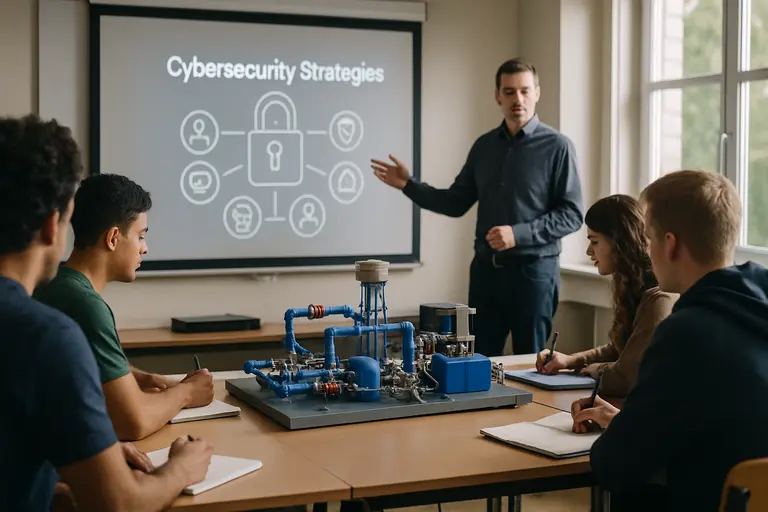
As an educator, I would frame this topic for young learners as a systems problem rather than a fear-based security story. A classroom model can use a small pump, a sensor, and a microcontroller to show that every added device has a function and a power cost. Students can compare a simple control setup with a monitored setup, then list which components improve visibility and which components only add load.
This kind of lesson connects electronics to public infrastructure in a concrete way. Related practical STEM resources at Camp Techwise provide valuable insights into how technology can be applied in real-world scenarios, especially focusing on sensors, circuits, and design boundaries. The goal is not to simulate an attack. The goal is to teach that safety, reliability, cost, and energy demand must be weighed together.
For older learners or utility staff training, case-based reading can help connect defensive planning to actual control-system weaknesses. A related discussion of water system cyber risks and controls can be used as a starting point for reviewing authentication, remote access, and operational planning without giving exploit instructions.
Energy Planning For Water System Cybersecurity
Practical Criteria For Decisions
Energy planning for water system cybersecurity works best when it is tied to specific assets. Before a utility adds always-on equipment, staff can ask whether the same risk reduction can be achieved through assessment, configuration cleanup, access limits, or better response procedures. When hardware is needed, staff can record expected power demand and confirm that the device is sized for the facility rather than a generic deployment pattern.
The cautious path is to treat security and energy efficiency as linked engineering requirements. Water utilities need protection from cyber incidents, but they also need stable operating costs and energy discipline. The strongest planning question is not whether cybersecurity uses energy; powered equipment does. The better question is which controls reduce verified risk with the least unnecessary load, while keeping treatment and distribution operations reliable.