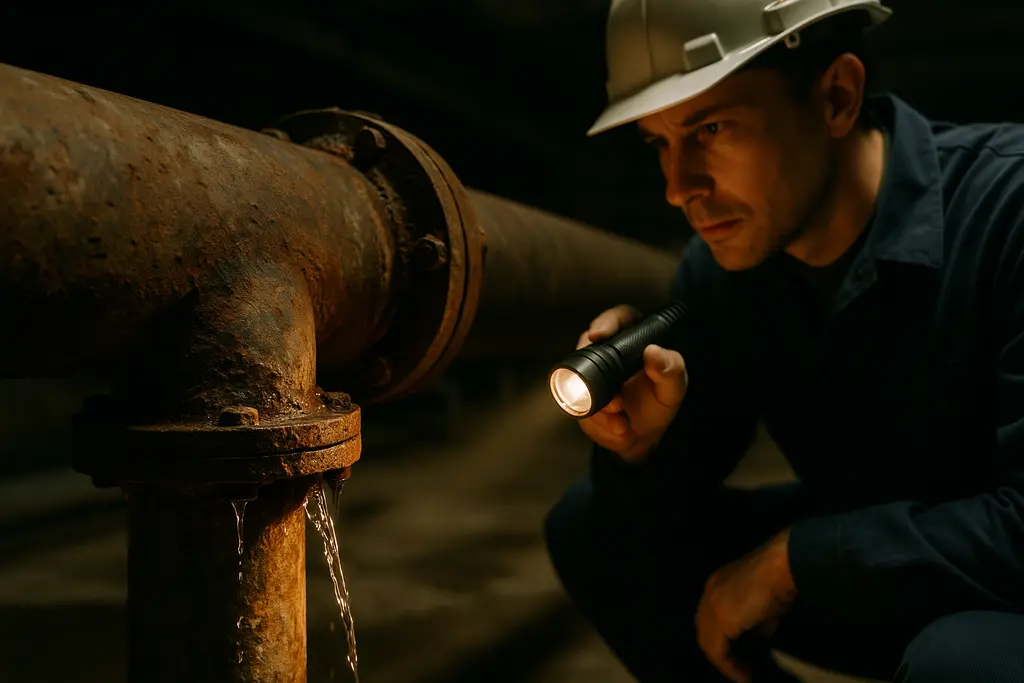
Outdated Water Systems are not risky for one reason alone. The risk depends on pipe age, pressure settings, sensor placement, control network design, maintenance records, staffing, and funding constraints. Two utilities can own assets of similar age and still see different outcomes because their configurations are different. That is the central engineering issue: aging infrastructure creates exposure, but local design choices decide whether a weakness becomes a leak, a service interruption, a cyber incident, or a manageable maintenance task.
Why Outdated Water Systems Fail Differently
Configuration Lessons For Outdated Water Systems
Water infrastructure is a physical system first. Pipes, valves, pumps, tanks, and treatment equipment must hold pressure, move water, and support quality controls. Yet the condition of those components is only one part of the risk picture. A brittle pipe under stable pressure may survive longer than a similar pipe exposed to frequent pressure swings. A pump station with clear isolation valves may be easier to repair than one that requires a wider shutdown. A sensor that is poorly placed may miss the operating condition that matters most.
This is why configuration-dependent outcomes are hard to reduce to a single score. Age matters, but layout and operating practice matter too. Outdated Water Systems can experience higher leakage, higher repair frequency, and longer outage windows when asset condition data is incomplete or when maintenance is reactive. The same aging component may carry different operational risk depending on redundancy, spare parts, crew access, and the ability to isolate a fault without affecting many customers.
Leak Data Shows The Scale Of Physical Loss
Leakage is one visible result of aging assets and deferred renewal. In England and Wales, water companies lost more than one trillion litres from leaks in the previous year, and Thames Water was reported as losing about 570.4 million litres daily, according to reported leak losses. Those figures do not prove that every leak came from the same failure mode. They do show that losses can become very large when networks contain old pipes, difficult access points, and maintenance backlogs.
For educators and maker-culture projects, this is a useful teaching case. A classroom model with tubing, pressure sensors, and a small pump can show why a small change in valve position or sensor location changes the outcome. The lesson transfers well to public infrastructure: the system is not just a list of parts, but a set of configured relationships between parts.
How Configuration Changes Outcomes
Pressure, Isolation, And Detection
A water network has several practical configuration variables. Pressure settings affect stress on pipes and joints. Isolation valves define how much of the network must be shut down during repairs. Flow meters and acoustic sensors influence how quickly leaks are detected. Data logging intervals affect whether short events are visible to operators. None of these details is dramatic on its own, but together they decide whether a fault remains local or spreads into a larger service problem.
Configuration choices also affect maintenance planning. If records show pipe material, age, repair history, and pressure zones, crews can rank replacements with more evidence. If records are missing, the utility may rely on break history alone, which can bias repairs toward the most recent visible failures. That does not mean older records solve every problem. It means better asset data can reduce uncertainty when budgets are limited.
Controls Must Match The Physical System
Modern water operations often connect physical equipment to programmable controls and remote monitoring. This can improve visibility, but it also makes configuration discipline more important. A pump command, alarm threshold, or chemical dosing setting only makes sense when it matches the real equipment and site conditions. If the control settings drift away from field conditions, operators may receive alarms too late, too often, or without enough context.
Defensive cybersecurity planning fits into the same principle. A programmable logic controller should not be treated as separate from the pump or valve it controls. The security effect depends on authentication, network exposure, update practices, and operator procedures. A related discussion of PLC security vulnerabilities explains why exposed devices, default passwords, aging software, and limited staffing can all affect water controls. The practical aim is not alarmism; it is reducing avoidable pathways to unsafe or unreliable operation.
Cost Pressure Around Outdated Water Systems
Replacement Is A Budget And Timing Problem
Replacing old water assets is expensive because utilities must maintain service while planning excavation, treatment upgrades, permitting, and customer communication. The economic strain is not limited to one city or one pipe material. In 2026, the U.S. water sector was described as facing a $625 billion water challenge linked to aging infrastructure, stricter regulations, and affordability concerns. That number frames the scale of the funding issue without telling any single utility exactly which asset should be replaced first.
Outdated Water Systems therefore create an engineering tradeoff. Replacing every high-risk asset immediately is usually not financially realistic. Waiting until failure can be more disruptive and costly. The middle path is risk-based renewal: identify the assets whose failure would cause the most harm, then combine replacement with leak detection, pressure management, and better operational records.
Affordability Limits Technical Choices
Technical fixes must survive contact with ratepayer affordability. A high-end sensor network may help a large utility, while a small system may struggle to maintain the same equipment and data review process. A new control platform may reduce manual checks, but it also creates training needs and ongoing support costs. These barriers do not make modernization unnecessary. They mean project scope must match staffing, maintenance capacity, and the level of service risk.
This is where education has practical value. Students who build simple water-monitoring demos learn that measurement has a cost. Sensors need calibration, data needs interpretation, and alerts need a response plan. Related hands-on learning resources from Natewin can support that kind of systems thinking without presenting public infrastructure as a simple gadget problem.
Cybersecurity Without Alarmism

Risk Comes From Exposure And Procedure
Cybersecurity risk in water infrastructure is often configuration-dependent. A control device isolated from public networks has a different risk profile than one reachable through poorly managed remote access. A current password policy has a different risk profile than shared credentials that remain unchanged after staff turnover. The technical details matter because water systems are safety-related operational environments, not ordinary office networks.
Outdated Water Systems may rely on older control equipment, but age alone does not define cyber risk. The risk also depends on segmentation, logging, backup procedures, vendor access, and how quickly staff can switch to manual or local operations if automation becomes unreliable. For a defensive view of recent water-sector issues, water system cyberattack controls covers authentication gaps and operational safeguards without providing exploit steps.
Security Work Should Support Operations
Security controls that interfere with plant operations are less likely to be sustained. A useful plan should identify critical functions, reduce unnecessary remote exposure, document approved access paths, test backups, and train operators on incident procedures. These actions are practical because they connect cybersecurity to continuity of service. They also avoid treating security as a one-time software purchase.
- Asset records should identify critical pumps, valves, sensors, controllers, and communication paths.
- Maintenance planning should link physical condition with control dependencies.
- Remote access should be limited, documented, and reviewed as staffing or vendors change.
- Leak detection should include a response process, not just measurement hardware.
Practical Controls For Outdated Water Systems
Start With Verifiable System Knowledge
The most defensible first step is knowing what exists. Utilities need accurate maps, asset condition records, control inventories, and maintenance history. This may sound basic, but it is the foundation for configuration-aware risk management. A utility cannot rank pipe replacement, sensor installation, or network segmentation well if it does not know which components are critical and how they connect.
The second step is to connect physical and digital maintenance. A valve replacement should update maps and operating procedures. A control change should be checked against the actual pump, tank, or chemical feed system. A leak event should feed back into renewal planning. These loops help prevent small changes from creating hidden dependencies.
Use Small Tests Before Large Commitments
Pilot projects are useful when their limits are clear. A district metering test, pressure management trial, or control network review can show whether a method works under local conditions. The result should be judged against maintenance effort, operator workload, data quality, and service impact. That cautious approach is better than assuming one technology package will fit every utility.
Outdated Water Systems require steady engineering work rather than a single fix. The evidence points to large leakage losses, major funding pressure, and real control-system concerns. The practical response is to reduce uncertainty: document assets, prioritize high-consequence failures, protect control pathways, and choose upgrades that staff can maintain. Configuration does not remove the cost of aging infrastructure, but it often decides how severe the outcome becomes.