Water system vulnerabilities are often configuration-dependent, meaning the risk depends less on a single device model and more on how that device is exposed, authenticated, segmented, and maintained. Recent U.S. attacks on water and wastewater systems showed that programmable logic controllers, remote access tools, and weak account practices can turn ordinary operational technology into a public-safety concern. The evidence does not support panic, but it does support careful review of how utilities connect control equipment to networks.
Configuration Patterns Behind Water System Vulnerabilities
Water System Vulnerabilities Start With Exposure
Many recent incidents involved internet-exposed systems. In water operations, exposure can include remote management portals, control interfaces, or monitoring systems that can be reached from outside the utility network. A programmable logic controller, or PLC, is designed to regulate physical processes such as pumps, valves, and treatment equipment. It is not automatically unsafe, but risk rises when remote access is open, poorly segmented, or protected by weak authentication.
As of late July 2026, more than 30 municipal water and wastewater systems in Minnesota had been affected by a cyberattack in which operational technology devices, including PLCs, were compromised. The reported effects included systems being taken offline or access being blocked after passwords were changed, according to The Washington Post. That report also tied many weaknesses to default credentials or weak passwords on exposed devices. Those details matter because they point to correctable configuration issues rather than an unavoidable failure of water treatment technology itself.
Default Credentials Are A Configuration Failure
Default credentials are factory-set usernames and passwords that may remain in place after installation. In a classroom electronics project, leaving a default password on a networked microcontroller might risk only a demonstration board. In a water utility, a comparable mistake can affect monitoring, pressure control, or operator access. The technical lesson is simple: authentication settings are part of the system design, not an administrative afterthought.
Weak passwords, shared accounts, and missing unique logins reduce accountability. If several operators use one account, it becomes harder to determine who changed a setting or whether an outside actor gained access. If a remote interface allows repeated login attempts without strong controls, the risk grows. These points do not require revealing attack steps; they are defensive principles that help utilities reduce preventable exposure.
Why Exposed Controls Change Operational Risk
Remote Monitoring Helps, But It Changes The Boundary
Water and wastewater utilities use remote monitoring because it can help small teams observe pump stations, tanks, and treatment processes without sending staff to every site. That operational value is real. The risk appears when the boundary between business networks, internet-accessible tools, and operational technology is weak. A control network that was once reachable only from a local facility may become reachable through a vendor portal, cellular modem, remote desktop tool, or misconfigured firewall.
Research notes for 2026 described attacks across multiple states, with impacts ranging from loss of remote monitoring and control to pressure drops and boil-water advisories. The available evidence does not show that every affected utility had the same architecture or the same failure. Configuration-dependent outcomes are expected in this sector because utilities differ in size, budget, staffing, vendor equipment, and age of infrastructure.
Segmentation Limits Damage
Segmentation separates systems so that access to one area does not automatically grant access to another. For water utilities, that can mean separating public-facing services, office computers, remote monitoring, and PLC control networks. Segmentation does not remove every risk. It does, however, reduce the chance that a single exposed service becomes a path into physical process control.
For water system vulnerabilities, the most relevant question is often not whether a device is modern, but whether it is reachable, authenticated, logged, and isolated correctly. An older device on a well-controlled local network may pose less risk than a newer device placed directly on the internet with weak access controls. That distinction is useful for educators because it shows students that engineering safety depends on system context, not just component labels.
Defensive Configuration Checks For Utilities

Controls Should Be Practical And Verifiable
The Environmental Protection Agency said in a February 6, 2026 release that it had proactively identified cybersecurity vulnerabilities at 277 water systems in 2025 and initiated fixes that included stronger authentication and access control changes, according to the EPA. Those examples align with the configuration issues seen in recent attacks: who can log in, from where, with what privileges, and with what monitoring.
- Replace default passwords and require unique accounts for operators and vendors.
- Review which PLCs, portals, and monitoring tools are reachable from external networks.
- Separate office IT systems from operational technology wherever practical.
- Limit remote access to approved users, approved devices, and documented maintenance windows.
- Keep offline backups of key configurations so operators can restore known-good settings.
- Document manual operating procedures for cases where remote monitoring is unavailable.
These checks are not a complete security program, and they may be difficult for small utilities with limited staff. Cost and maintenance burden matter. Stronger authentication can require new account management procedures. Segmentation may require network redesign, vendor coordination, and testing to avoid disrupting legitimate operations. Monitoring tools can add alert volume that small teams must review. A cautious approach treats each control as an engineering change that needs documentation, testing, and operator training.
PLCs Need Operational Context
A PLC is not the same as a general-purpose office computer. It may run for years with few visible changes, and it may control equipment that cannot be interrupted casually. Applying updates, replacing hardware, or changing network rules requires planning because water service depends on continuous operation. That is why configuration management is central: utilities need to know which devices exist, what they control, who can access them, and how their settings can be recovered after an incident.
A related technical discussion of PLC security in water systems explains why exposed devices, default passwords, aging software, and limited staffing often appear together. The pattern should be treated as an operational risk cluster rather than a single product defect. A utility may fix one weak password and still remain exposed if remote access, logging, and backup practices are not reviewed at the same time.
Water System Vulnerabilities In Classroom Analysis
Turning Incidents Into Safe STEM Lessons
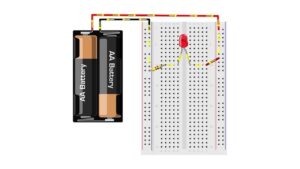
Teaching water system vulnerabilities can help young learners connect electronics, controls, and civic infrastructure without demonstrating harmful techniques. A safe lesson can use a disconnected model: a microcontroller, LEDs for pumps, a switch for a valve, and paper network diagrams. Students can compare two designs. One design uses shared passwords and a direct outside connection. The other uses unique accounts, limited access, and a separated control segment. The learning goal is to reason about design choices, not to practice intrusion.
This approach fits early engineering education because it links abstract cybersecurity terms to physical outcomes. If a simulated pump receives the wrong command, the model tank level changes. Students can see why authentication, backup settings, and manual overrides matter. They also learn that a system can be technically functional while still poorly configured. For related classroom presentation materials, the same network includes free slideshow resources that can support non-operational safety discussions.
A Measured Lesson From Recent Attacks
The recent U.S. incidents show that water utility cybersecurity is not only about advanced tools. Basic configuration choices remain central: remove default credentials, reduce external exposure, segment control networks, and maintain recoverable settings. These steps do not guarantee safety, and the public record does not provide enough detail to assign one cause to every incident. Still, the documented pattern is consistent enough to guide practical defensive review.
For educators, the strongest lesson is that infrastructure depends on both hardware and procedure. A pump, PLC, or sensor does what its wiring, code, and permissions allow. When those permissions are poorly set, a reliable device can become a weak point. When they are reviewed, documented, and tested, the same equipment can support safer operation. That is a concrete engineering idea students can understand: security is built into configuration, maintenance, and accountability.