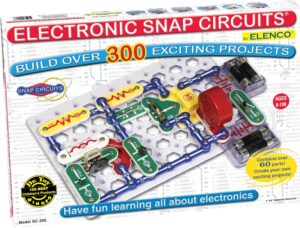
In our previous post, we explored the fun of traditional electronics kits and why their popularity has declined over time. Many of those challenges came down to limited parts, one-time builds, and the cost of continued experimentation. We ended that discussion by mentioning a modern solution—one that removes many of those limitations and opens the door to far more creative learning.
That solution is a new type of electronics kit that brings hands-on building into the digital world. Home computers have evolved dramatically since the early days of electronics kits, and today they offer enough power to design, test, and experiment with electronic systems entirely online.
A Virtual Approach to Building Electronics
Imagine working with a fully interactive virtual PCB board on your computer. Modern electronics lab programs make this possible by allowing users to design and test electronic circuits without physically assembling them. These platforms are often referred to as 3D Virtual Lab software, combining educational tools with professional-grade simulation technology.
Using advanced 3D imaging, these programs recreate electronic components with impressive realism. When you place or move a component, it behaves just as it would on a real circuit board. Wires connect naturally, signals flow as expected, and components interact exactly like their physical counterparts.
Why 3D Virtual Lab Software Works So Well
One of the greatest advantages of virtual electronics labs is that they solve nearly every drawback of traditional kits. Parts never break, supplies never run out, and users are not limited to building just one device.
Most virtual lab platforms include well over a hundred components, covering both digital and analog electronics. Each part can be reused as many times as needed, allowing builders to experiment freely without worrying about cost or damage. This flexibility encourages creativity and deeper understanding.
Unlike traditional kits that rely heavily on step-by-step instructions, virtual labs push users to think independently. While tutorials and sample projects are often included, much of the learning comes from designing original circuits and testing new ideas.
Professional-Level Tools Without the Cost
Advanced testing equipment such as oscilloscopes, signal generators, and spectrum analyzers rarely appear in physical electronics kits. In a virtual lab environment, however, these tools are readily available. Users gain access to powerful diagnostic features that would otherwise be too expensive or impractical.
If a project fails, virtual labs make it easy to analyze what went wrong. Simulations can be slowed down, replayed, rewound, or sped up, giving users a clear visual understanding of circuit behavior over time.
From Virtual Design to Real-World Builds
When a project works particularly well, it does not have to remain digital. Users can take their completed designs and order the necessary components to build them in real life, as long as realistic parts are used. This makes virtual labs an excellent bridge between theory and hands-on construction.
Reusability is another major advantage. Virtual lab software can be used indefinitely, allowing learners to move from one project to another without additional cost. Even after taking a break, users can return to the software at any time.
Accessible for Students and Hobbyists
For beginners, most virtual lab programs include pre-built examples designed to teach basic concepts and guide users through circuit tuning and testing. These samples help ease newcomers into electronics without overwhelming them.
Licensing is typically affordable, making these tools accessible to students, hobbyists, and educators alike. Single-user licenses are often inexpensive, with options for multi-machine or bulk licensing available as well.
A New Future for Electronics Education
The age of electronics kits is far from over—it is simply evolving. Virtual lab software offers a powerful, flexible, and engaging way to learn electronics, removing many of the barriers that once limited traditional kits.
By embracing these tools and spreading awareness, we can inspire a new generation of engineers, innovators, and curious learners while keeping hands-on electronics education alive and thriving.