A good beginner electronics kit does more than give you parts. It gives you a sequence. That matters because most people do not get stuck in electronics because they lack curiosity. They get stuck because they buy a random pile of components with no path, no project order, and no clue which parts actually matter first.
The best beginner kits solve that problem by narrowing the field. Instead of asking you to understand everything at once, they introduce a small group of components, a breadboard, a few safe power options, and guided projects that build confidence in the right order. Arduino’s official Starter Kit, for example, is built around 13 hands-on projects, while SparkFun and Adafruit both emphasize starter kits as a way to remove the guesswork from learning electronics.
That is why the real question is not just “What kit should I buy?” It is “What kind of learner am I, and what should come after the first kit once the basics stop feeling new?”
What A Good Beginner Kit Should Actually Include
A strong starter kit should teach the foundations of circuits, not just entertain you for a weekend. The most useful kits usually include a breadboard, jumper wires, resistors, LEDs, switches, and a mix of simple input and output parts. Many also add sensors and a microcontroller so you can connect physical components to code. Adafruit describes its Discover Electronics Kit as a set built around common electronics components and a prototyping breadboard, while Arduino positions its Starter Kit as an all-in-one entry point with guided projects and all required components.
That combination matters because beginners need both parts and context. A resistor in a plastic bag does not teach much by itself. A resistor used to protect an LED in a guided project teaches current limiting, polarity, and troubleshooting all at once.
If you are still early in the learning process, it helps to build confidence with core measuring skills before expanding into bigger kits. A lesson like using a multimeter fits naturally alongside any starter setup because it turns guessing into testing.
The Main Types Of Beginner Kits
Not all beginner kits are trying to teach the same thing. Some are designed to explain basic components. Others are designed to get you coding fast. A few are really “build kits” that are fun, but narrower in educational value.
Component-First Kits
These kits focus on the parts themselves: resistors, capacitors, transistors, LEDs, switches, and breadboards. SparkFun’s Beginner Parts Kit and related beginner identification materials are good examples of this approach, emphasizing recognition and understanding of common through-hole parts.
This type of kit is strong for learners who want to understand what each component does before moving into programming. It builds a better electronics foundation, especially if your goal is to read simple schematics and troubleshoot real circuits.
Microcontroller Starter Kits
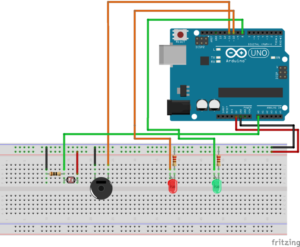
These kits pair electronics with programming. Arduino’s Starter Kit is the clearest example, combining the board, components, and a structured project path. The official materials emphasize guided builds ranging from LEDs to motors and sensors.
This category is ideal if you want visible results quickly. Buttons trigger actions, sensors change outputs, and code lets you experiment without rewiring everything. The tradeoff is that some learners start writing code before they really understand the circuit underneath.
Skill-Specific Kits
Some kits are designed around one step forward, such as soldering practice, Pico-based coding, or classroom lessons. SparkFun’s beginner kit guides and Adafruit’s Pico-focused electronics kit both show how specialized kits can be used to deepen one area after the basics are in place.
These are often the best “next kit” purchases because they solve a specific problem: “I know the basics, now I want to learn soldering,” or “I understand LEDs and switches, now I want sensors and microcontrollers.”
What To Look For Before You Buy
A beginner kit is better when it helps you learn progressively, not when it simply contains more parts. Large kits can actually slow learning because they make every project feel open-ended.
Here is a practical comparison of what matters most.
| Feature | Why It Matters | Best For |
|---|---|---|
| Guided projects | Gives you a clear order to learn in | Complete beginners |
| Breadboard and jumper wires | Makes experimentation easy and low-risk | First circuits and testing |
| Common components | Teaches reusable fundamentals | Long-term learning |
| Microcontroller included | Adds coding, sensors, and outputs | Learners interested in Arduino or robotics |
| Documentation quality | Reduces frustration and guesswork | Everyone, especially kids and beginners |
| Expansion potential | Lets the kit grow with your skills | Hobbyists planning a second phase |
The best kit is usually the one that gives you enough structure to finish several projects, while leaving enough room to ask, “What happens if I change this?”
The Biggest Mistake Beginners Make With Kits
The most common problem is buying too much too early. People see giant assortments with hundreds of components and assume that more variety equals more value. In practice, a large unstructured assortment often creates decision fatigue.
A smaller kit with projects usually teaches more because it creates momentum. You finish one working circuit, then another, and then another. That sequence builds pattern recognition. Soon you know what a resistor is for, why polarity matters, and how a breadboard is organized.
This is also why “cheap clone bundles” can be disappointing. Even when the hardware is usable, poor instructions often turn simple learning into blind trial and error. Official learning ecosystems from Arduino, SparkFun, and Adafruit all put heavy emphasis on step-by-step guidance for a reason.
What To Get Next After Your First Kit
Once you finish a true beginner kit, the smartest next purchase is not another general starter kit. It is a targeted upgrade based on what you enjoyed most.
If you liked circuit basics, get a better parts assortment with more resistors, capacitors, transistors, and switches. If you liked interactive projects, expand into sensors, displays, and motor control. If you enjoyed building permanent versions of your projects, move toward soldering tools and perfboard.
That progression is more efficient than buying “more beginner stuff” because it turns your second purchase into a skill choice.
A Good Second-Step Buying Path
If your first kit was mostly breadboard-based, your next additions should usually be:
- a better multimeter
- a more organized component assortment
- extra LEDs, resistors, buttons, and jumper wires
- a small sensor pack or display module
- a basic soldering setup when you are ready
That path works because it strengthens the tools and parts you will reuse in almost every project.
When To Move Beyond General Starter Kits
You are ready to move on when the kit stops teaching new ideas and starts feeling repetitive. That usually happens after you understand power, ground, resistors, LEDs, switches, and basic sensor input.
At that point, the goal shifts from “learn the basics” to “build systems.” That might mean small robots, sound projects, microcontroller programming, or soldered versions of your favorite breadboard circuits.
Arduino’s official materials position their starter ecosystem as a pathway into broader electronics and coding, while SparkFun’s learning pages make a similar case for kits as a launch point rather than a finish line.
A strong next step for many learners is an official Arduino Starter Kit reference path, because it connects electronics parts with structured projects and gives beginners a clear bridge from simple circuits to programmable builds.

Which Kit Style Makes The Most Sense?
For younger beginners or anyone who wants a gentle introduction, a component-first or classroom-style kit is often the best fit because it keeps the focus on simple cause and effect.
For older beginners who are motivated by interactivity, a microcontroller-based kit is often better because it creates faster “wow” moments. LEDs blink, sensors react, and projects feel more like systems than isolated parts.
Neither route is wrong. The real key is matching the kit to the learner’s patience, goals, and curiosity.
The Best Kit Is The One That Leads To The Next Project
A beginner kit should not be judged only by what is in the box. It should be judged by what it makes you want to build after the box is open.
That is the sign of a good first kit: it teaches enough structure to remove confusion, enough flexibility to invite experimentation, and enough success to make the next purchase obvious. Once that happens, you are no longer just collecting parts. You are developing a workflow.
And that is when electronics starts getting truly fun.