Setting up a space to build circuits requires a few focused items. Buying random parts often leads to frustration. A clear desk and the right gear keep your projects moving forward smoothly. You do not need expensive machines right away. A simple, well-stocked beginner electronics area makes learning much faster.
Start With a Clean Testing Area
Your physical desk matters just as much as your electronic parts. Working on a cluttered table hides small components and creates dangerous short circuits. A clean, flat surface gives you room to lay out your wiring diagrams. Adding a silicone soldering mat provides a heat-resistant, anti-static layer that protects your desk. Good lighting prevents eye strain when reading tiny color codes on resistors.
The Core Breadboarding Supplies
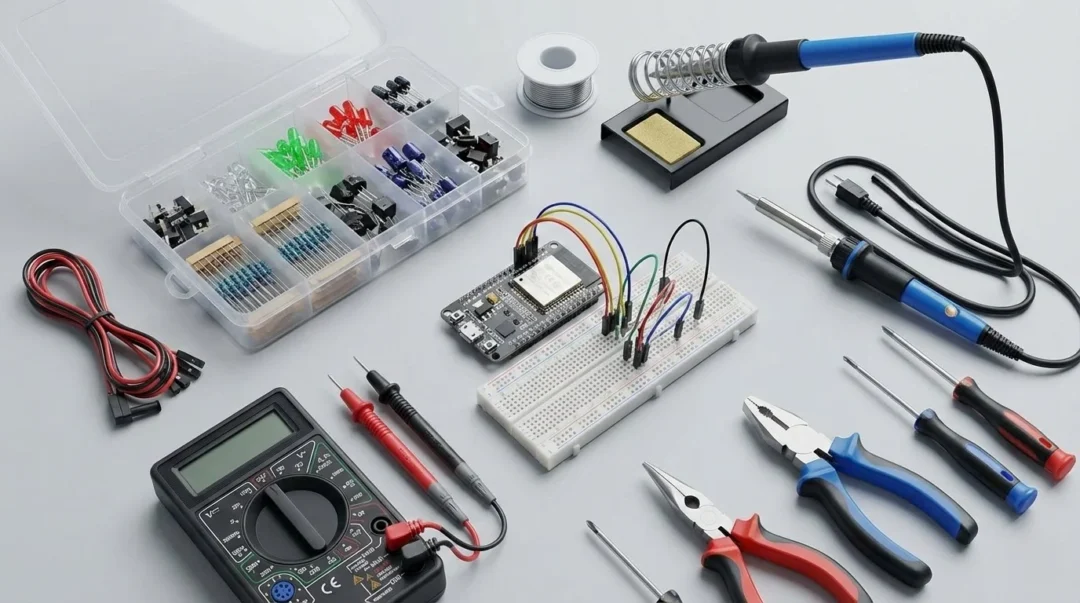
Every new builder needs a way to connect parts without melting metal. A breadboard acts as your main testing platform. You push parts into the holes to form temporary connections. This lets you experiment safely. Jumper wires create the electrical paths between your sensors and your power source.
A reliable power supply is another mandatory item on your desk. A simple 9-volt battery clip with pre-tinned leads works perfectly for daily testing. It keeps your voltages low and completely isolated from dangerous wall outlets.
| Tool | Primary Function | Why You Need It Early |
| Breadboard | Connects parts without solder | Lets you build and rebuild circuits instantly |
| Jumper Wires | Routes electricity between rows | Forms the physical paths for your project |
| 9V Battery Clip | Provides safe, low-voltage power | Keeps your tests isolated from wall power |
Basic Wire Preparation Tools
Pre-cut wires work well for simple tests. As your projects grow, you will want to cut your own wires to exact lengths. A pair of flush cutters trims component legs right at the board surface. This keeps your layout neat and prevents accidental shorts. A basic set of wire strippers removes the plastic insulation from copper wire without breaking the metal inside. Having the right hand tools saves hours of frustration. Many engineers recommend starting with high-quality hand tools, and reading a guide on how to equip a workspace gives you excellent recommendations for reliable brands.
Measuring Electricity With a Multimeter
A circuit failing to turn on happens often. You need a way to see invisible electrical signals to fix the problem. A digital multimeter is the single most valuable item on your desk. This device measures voltage, checks for broken wires, and reads exact resistor values. It removes the guesswork from troubleshooting.
Instead of wondering if a battery is dead, you test it directly. If an LED stays dark, you measure the voltage at the pins. For beginners ready to assemble their first hands-on kits and builds, learning to read these numbers changes everything. It turns random trial and error into a clear, logical process.
Keeping Components Organized
Electronic parts are small and easy to lose. A tiny resistor looks identical to a different value resistor from three feet away. Dropping them in a single drawer creates a massive headache later. Plastic tackle boxes or small craft bins separate your parts by type and value.
You grab exactly what you need without sorting through a pile. Keeping your parts sorted keeps your mind focused on building the actual circuit. For a comprehensive look at sorting hardware, you can review this component organization guide to see how professional labs manage thousands of tiny pieces daily.