Every circuit needs a safe, reliable energy source to function. Selecting the best batteries for simple electronics projects keeps your hardware safe and prevents frustrating voltage drops. Beginners often grab whatever battery they find in a drawer, expecting it to run any component they wire up. Matching the exact voltage and current capacity to your specific components determines if your LED lights up beautifully or burns out entirely in a split second.
The Classic 9-Volt Battery
The rectangular 9-volt battery serves as the most common starting point for breadboard testing. A simple snap-on clip with bare wire leads connects this battery directly to your voltage rails. This single unit delivers high voltage in a compact, easy-to-handle size.
Most beginner microcontrollers feature a built-in voltage regulator that safely drops this 9-volt supply down to a usable 5-volt level. Reviewing a detailed battery technologies guide shows you how the chemistry inside these rectangular cells favors low-current, long-lasting testing over heavy motor lifting. They excel at running logic chips and basic sensor arrays on your desk.
Scaling Up With AA and AAA Packs
When you transition from lighting small LEDs to spinning motors, you need more electrical current. The 9-volt battery struggles to provide the heavy push required by mechanical parts. This situation calls for standard AA or AAA battery packs.
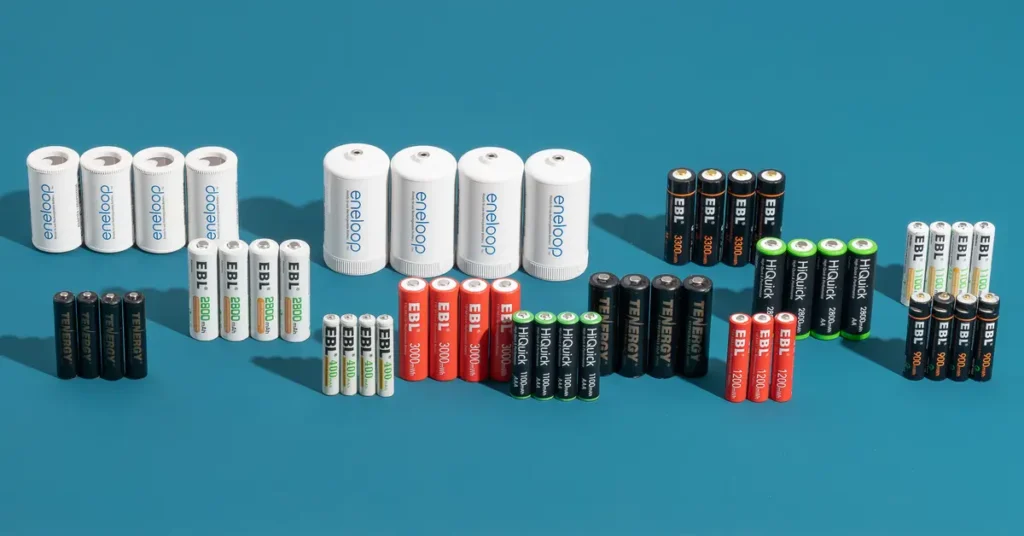
Each standard alkaline AA battery provides 1.5 volts. By placing them in a wired plastic holder, you add their voltages together. A pack of four AA cells delivers a solid 6 volts with a much higher current capacity than a single rectangular battery. This exact setup appears frequently in standard hands-on kits and builds that feature moving robotic wheels. The thicker cylindrical cells hold more total energy and handle sudden current spikes smoothly without forcing your microcontroller to reset.
Coin Cells for Wearable Projects
Sometimes your project needs to fit inside a tiny enclosure or sit flat against a piece of fabric. Heavy battery packs ruin small wearable designs. The CR2032 coin cell solves this severe space limitation.
These flat, circular batteries provide a steady 3 volts, which matches the exact requirement for lighting a standard LED. Exploring a reliable coin cell battery overview explains how these tiny units prioritize a microscopic footprint over long lifespans. You slide the flat battery directly between the long and short legs of an LED for an instant, tape-ready circuit.
| Battery Type | Output Voltage | Ideal Project Use |
| 9-Volt | 9V | Testing breadboards and running standard microcontrollers |
| 4x AA Pack | 6V | Driving heavy DC motors and small robotic chassis |
| CR2032 Coin Cell | 3V | Lighting single LEDs in tight, wearable enclosures |
Matching Voltage to Your Components
Choosing the right energy source comes down to reading your component limits. Pushing 9 volts directly through a delicate 3-volt sensor creates permanent heat damage instantly. You must read the hardware labels before connecting your jumper wires to the main rails.
If your battery produces more voltage than your parts can safely handle, you add a voltage regulator to the breadboard. Studying a clear circuit voltage tutorial teaches you how these tiny, three-legged chips act as a safety gate. The regulator takes a high, messy voltage and forces it down to a smooth, safe level for your sensitive microchips. Selecting the right battery and combining it with the correct regulation keeps your projects running efficiently for months.