Smart Energy Management projects are no longer only utility-scale software exercises. In a Kits & Builds setting, they can mean a bench setup with sensors, a small controller, a connected meter, and a controllable load. The hard part is not making one lamp switch off when demand rises. The harder work is making data trustworthy, devices compatible, control logic safe, and maintenance realistic after the first classroom demo.
Why Smart Energy Management Builds Stall
Smart Energy Management In A Kit Build
A small build can teach the same integration problems that appear in larger energy systems. A sensor reports voltage, current, temperature, or occupancy. A controller processes that signal. A communication layer carries the data. A rule-based or AI-assisted system decides whether to reduce a load, charge a battery, or send an alert. Each step depends on the quality and timing of the previous step.
A 2026 review of AI, IoT, and solar PV-integrated home energy management systems reported several barriers to wider deployment: interoperability, cybersecurity vulnerabilities, scalability, cost, limited generalization, and low technology readiness the 2026 HEMS review. Those findings fit classroom and maker projects as well. A prototype may work with one sensor brand, one cloud service, and one sample data set, yet fail when the sensor is replaced, the network drops packets, or the load profile changes.
Interoperability Before Prediction
AI is often discussed as the visible feature, but the practical constraint is usually the interface between components. If a meter, inverter, thermostat, or relay exposes data in incompatible formats, the control layer must use adapters or middleware before any model can use the data. For students, this is a useful lesson: a prediction algorithm cannot correct missing timestamps, inconsistent units, or unreadable device states.
For readers comparing education-scale builds with utility-scale barriers, the related analysis on AI adoption barriers in power sector data covers similar problems around fragmented data, scarce skills, licensing questions, and governance limits. The scale differs, but the pattern is close: poor data structure raises engineering effort before the energy control problem has even started.
The Hardware And Data Path
Sensor Data Is Not Automatically Useful
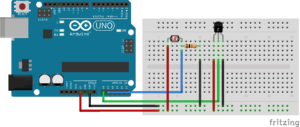
A Smart Energy Management kit normally starts with measurement. Current sensors, smart plugs, temperature sensors, and occupancy inputs can provide useful signals, but they also introduce calibration, placement, sampling, and timing concerns. A current reading taken at the wrong interval may miss a short load spike. A temperature sensor near a heat source may not represent the room. An occupancy sensor may indicate motion without confirming whether a load should remain active.
The build should separate raw collection from decision logic. First, verify that the measured values are plausible. Then check whether readings remain stable across repeated tests. Only after that should the project add automated control. This order is less exciting than starting with a model, but it prevents a common failure: treating low-quality data as if it were a clean signal.
Edge Devices Reduce Some Data Movement
Edge processing can keep some decisions close to the hardware. In a kit, that may mean using a microcontroller or single-board computer to filter readings, apply thresholds, or run a small model before sending data onward. This can reduce dependence on constant remote access, but it does not remove maintenance work. The edge device still needs power, firmware updates, secure configuration, and logs that a teacher or technician can understand.
The practical test is simple: if the network is unavailable, what does the system do? A safe kit should fail into a known state rather than leave a load in an uncertain condition. That may mean reverting to manual control, using conservative thresholds, or recording data locally until communications return.
Security And Governance Limits
OT Risk Is Not A Software Detail
Energy projects connect software decisions to physical equipment. That makes cybersecurity more than a login problem. A compromised dashboard, weak device credential, or poorly segmented network could affect monitoring or control. Even in a classroom, the right habit is to treat energy devices as operational technology, not as ordinary gadgets.
IBM’s 2025-2026 utility research reported that more advanced utilities had reliable digital data across most operational sites, that 86% used middleware or edge platforms to wrap legacy or proprietary systems for interoperability, and that nearly 80% said cybersecurity concerns delayed retiring outdated systems IBM utility operations research. Those figures are about utilities, not school kits, so they should not be copied directly into a classroom risk estimate. They do show why security and legacy integration are linked in real deployments.
Governance Starts With Small Rules
For a maker project, governance can be practical rather than bureaucratic. Document which device can control which load. Record default states. Keep credentials out of shared code files. Mark who is allowed to change thresholds. Save model or rule versions so a bad control change can be traced. These practices make the project easier to review and safer to hand from one student group to the next.
Education projects also need clear boundaries around data collection. If occupancy or behavior-related signals are used, the build should minimize personal data and explain why each data point is needed. A project can teach energy optimization without collecting more information than the task requires.
Costs, Skills, And Classroom Adoption

Budget Pressure Appears After The First Demo
The first working prototype may use low-cost modules, spare boards, and open-source software. Scaling the same design across multiple benches or classrooms changes the cost profile. Spare sensors, power supplies, safer enclosures, replacement cables, and staff time all become part of the real build cost. The 2026 HEMS review identified cost as one barrier to broad deployment, and that applies to education settings in a smaller form.
Maintenance is often the hidden cost. A kit that depends on one teacher’s private cloud account or undocumented script is fragile. A stronger design uses parts that can be replaced, wiring that can be inspected, and software that another instructor can run without guessing how it was assembled.
Skills Are Part Of The System
Smart Energy Management education sits between electronics, data handling, networking, and energy systems. Students may understand code but not load behavior. Others may wire circuits well but have little experience with data cleaning. The project works best when the lesson plan treats those gaps as part of the build rather than as side issues.
- Start with manual measurement before adding automatic control.
- Use documented data formats and consistent units.
- Keep safety limits separate from AI or optimization logic.
- Test behavior during sensor failure and network loss.
- Record configuration changes so results can be repeated.
For a comprehensive view of electronics, networks, and hardware culture, Abacus is a related site in the same network and offers valuable insights. The useful point for builders is that energy kits are not isolated from wider device engineering habits. They depend on clear interfaces, repairable hardware, and cautious software control.
Smart Energy Management Build Priorities
What A Sensible First Build Should Prove
A good first build should not try to optimize every appliance. It should prove a narrower chain: measure one load, validate the data, apply one control rule, log the action, and recover from a failure state. If that chain is reliable, students can compare rule-based control with an AI-assisted approach. If the chain is not reliable, adding AI will usually make the diagnosis harder.
Smart Energy Management is most valuable as a teaching topic when it shows both capability and constraint. AI can support forecasting or control decisions when the inputs are reliable and the system boundary is clear. IoT hardware can expose useful energy signals when devices communicate predictably. Neither removes the need for secure configuration, compatibility testing, cost planning, and human review.
The practical path is to build small, document every interface, and expand only after the measured behavior matches the intended behavior. That approach gives students a clearer picture of why real energy systems adopt AI and IoT slowly: the barrier is not a lack of imagination, but the engineering work needed to make connected control safe, repeatable, and maintainable.